
Why Ecological Agriculture Must Become a Priority

Australian farmers are being asked to produce more food while managing rising input costs, unpredictable seasons, declining soil health and increasing pressure on their own wellbeing. For decades, the common response has been to apply more fertiliser, use another pesticide or find a stronger herbicide. But when these inputs become more expensive, weeds become harder to control and the soil no longer responds as it once did, farmers need another way forward.
What Is Ecological Agriculture?
Ecological agriculture includes regenerative, biological, organic, biodynamic and agroecological farming systems. Although the names and methods vary, they share one important principle: the farm should be managed as a living, connected ecosystem.
This means looking beyond individual problems and considering the relationships between:
- Soil structure
- Soil biology
- Plant diversity
- Water cycles
- Livestock
- Insects and wildlife
- Farm inputs
- Farmer health
- Long-term profitability
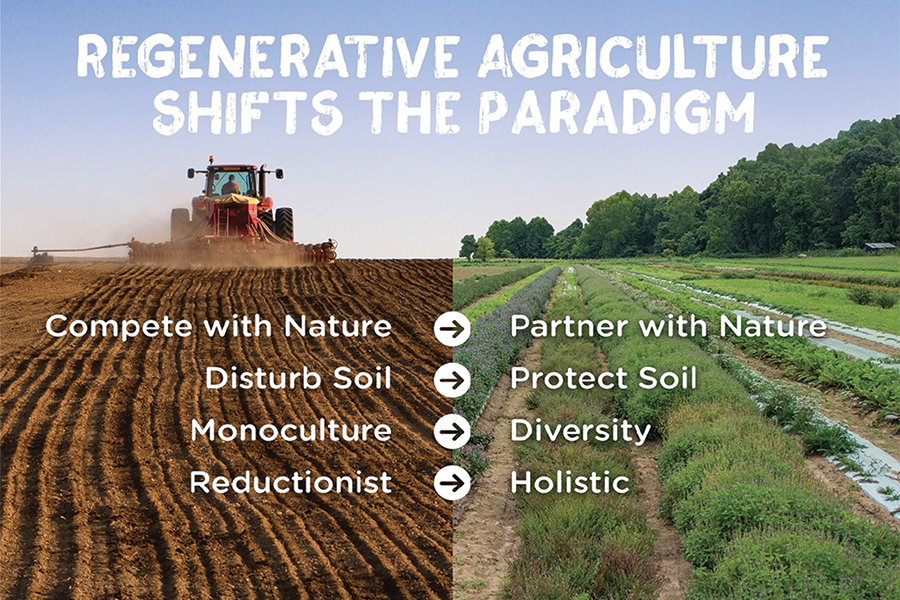
Instead of asking, “What can I apply to remove this problem?”, ecological farming asks, “Why has this problem developed, and what conditions need to change?” This shift in thinking moves the focus from repeatedly treating symptoms to understanding and addressing their underlying causes.
Why Are Farmers Looking for Another Way?
Farmers are drawn to ecological agriculture for many reasons. Some are concerned about the effects of agricultural chemicals on their health and the health of their families. Others want healthier animals, cleaner food, less environmental damage and produce they can be proud of. For many, the biggest pressure is financial, as the rising cost of fertilisers, herbicides, pesticides and other inputs continues to reduce farm profitability.
The warning signs can also be seen in the paddock:
- Earthworms become difficult to find.
- Soil becomes compacted or crusted.
- Rain runs off instead of soaking in.
- Crops struggle despite increased fertiliser.
- Weeds develop resistance to herbicides.
- Pastures become less diverse and resilient.
- Production becomes more vulnerable to dry conditions.
These are not always isolated problems. They may indicate that the farm’s natural systems are no longer functioning as effectively as they should. When soil structure, biology and nutrient cycling decline, farmers can become increasingly dependent on purchased inputs simply to maintain production.
Escaping the Agricultural Input Treadmill
Chemical inputs can deliver quick results, but they do not always correct the cause of a problem. A weed, pest or disease may be controlled temporarily while poor soil structure, weak biology, low plant diversity or ineffective nutrient cycling remains. When the problem returns, another application—or a stronger product—may be needed.
Over time, this can create a cycle:
- A problem appears.
- A product is applied.
- The immediate symptom is controlled.
- The underlying condition remains.
- The problem returns.
- Another or stronger input is required.
This cycle leaves the farm more exposed to rising prices and product availability. Ecological agriculture aims to reverse that dependence by rebuilding the natural processes that cycle nutrients, improve soil structure, hold water and support plant health.
Ecological Farming Requires Knowledge
Moving away from chemical dependence is not simply a matter of replacing a synthetic product with a biological one. Ecological farming requires farmers to understand how the whole farm works and how each decision affects the soil, plants, animals and wider environment.
Farmers need to discover:
- How their soil was formed
- What limits root development
- Whether water is infiltrating or running off
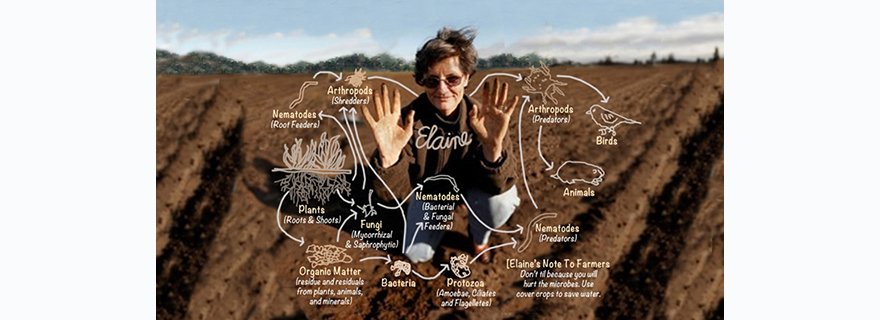
- How soil organisms cycle nutrients
- Why particular weeds are present
- How grazing affects plants and soil
- How biodiversity builds resilience
- Which practices help or harm soil life
There is no single prescription that suits every farm. Ecological management is based on observation, knowledge and decisions suited to each property’s soil, climate, enterprise and available resources. The greatest change is often not the product being used, but the way the farmer sees and interprets the farm.
Why Farmers Hesitate to Change
Even when farmers recognise that their existing system is no longer working well, changing direction can feel risky. They may be concerned about losing production, making an expensive mistake or placing an already stretched business under further pressure.
Common concerns include:
- Losing production during the transition
- Making a costly mistake
- Not knowing where to begin
- Lacking practical and trustworthy advice
- Being criticised by neighbours
- Having limited time to investigate alternatives
- Increasing risk during difficult seasons
These concerns are reasonable, which is why ecological change does not need to begin across the entire property. Farmers can start with one paddock, a small grazing area or several trial strips. By recording the starting conditions, changing one or two practices and comparing the results, they can build confidence from evidence gathered on their own land.
Useful measurements may include:
- Groundcover
- Root depth
- Water infiltration
- Soil structure
- Earthworm numbers
- Plant diversity
- Input costs
- Yield or livestock production
Small trials make change more manageable. They allow farmers to test ideas, observe what happens and expand only the practices that deliver worthwhile results.
Healthy Soil Changes What Is Possible
Soil is much more than a substance that holds plants upright. It is a living system that influences water, nutrition, plant health, animal health and farm productivity.
When soil is functioning well, it can:
- Capture and store more rainfall
- Cycle nutrients more effectively
- Support deeper and healthier roots
- Reduce erosion
- Improve plant resilience
- Produce better-quality feed
- Support greater biodiversity
- Reduce reliance on purchased inputs
These benefits reinforce one another. Better soil structure allows more water to enter, while stronger plants feed more carbon into the ground through their roots. That carbon supports soil organisms, which help release nutrients, build aggregates and further improve soil structure. This is how a regenerative cycle begins.
Farmers Need Education, Support and Confidence
Ecological agriculture cannot become mainstream through information alone. Farmers also need practical education, independent advice, local demonstrations and support from people who understand the transition.
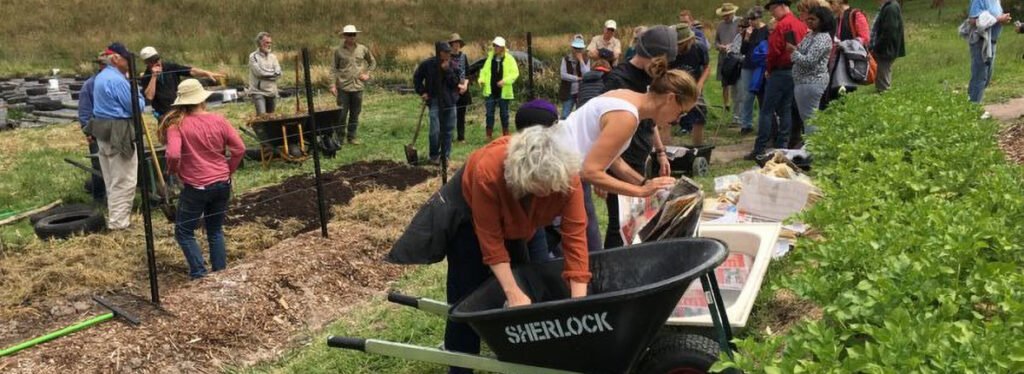
Field days, Landcare groups, farmer networks, courses and case studies can show what is achievable under similar conditions. Seeing a successful ecological system operating in the same region can give farmers the confidence to trial new practices without feeling they are taking the journey alone.
Agricultural research and formal education also need to give greater attention to:
- Soil biology and nutrient cycling
- Water infiltration and soil structure
- Plant and pasture diversity
- Low-input production systems
- Ecological weed and pest management
- Farmer-led trials and local case studies
- Practical transition strategies
Much agricultural research has traditionally focused on developing new products and technologies. Ecological agriculture has a different goal: to improve the farm’s natural functions so that fewer external inputs are required. That may create fewer products to sell, but it can deliver lasting value to farmers.
We Should Not Wait for a Crisis
Too often, farmers make major changes only after a health scare, drought, financial crisis or visible decline in their soil. Farmers should not have to reach that point before being supported to explore a different approach.
The first step can be as simple as digging into the soil and asking:
- Is the soil compacted?
- Are there living roots?
- Can I see earthworms?
- Does the soil smell fresh and healthy?
- How deeply are the roots growing?
- Does rainfall soak in or run off?
- Is the soil protected by living plants or residue?
These observations begin to reveal how well the soil is functioning and where improvement may be needed. They also help farmers make decisions based on what is actually happening beneath their feet rather than relying entirely on a prescribed input program.
A Better Agricultural Future Begins with the Soil
Ecological agriculture offers more than a way to reduce chemical use. It provides a path towards healthier soils, stronger farming businesses, safer food, healthier families and greater resilience during difficult seasons. Farmers need the confidence to test new practices, communities need to support them, and agricultural education and research must recognise that functioning ecosystems are the foundation of food production.
The transition will take time, but every farmer can begin somewhere. Start small, observe carefully, measure the results and expand what works. The future of farming will not be secured by continually using more inputs to push harder against nature; it will be built by understanding how nature works and farming with it.
Inspired by Alan Broughton’s article, “Ecological Agriculture Needs to Be Made a Priority”, originally published by Green Left and shared by Regeneration International. Alan is a founding educator of organic farming with a deep knowledge of how the soil functions.





Responses